

Introduction: A Quiet Revolution Is Already Underway
Agentic AI for business is no longer a concept reserved for Silicon Valley giants or research labs. It is happening right now, in the tools developers use daily, in the way companies build products, and in how teams make decisions. And the data is clear — businesses that understand this shift early will be the ones setting the pace in their industries.
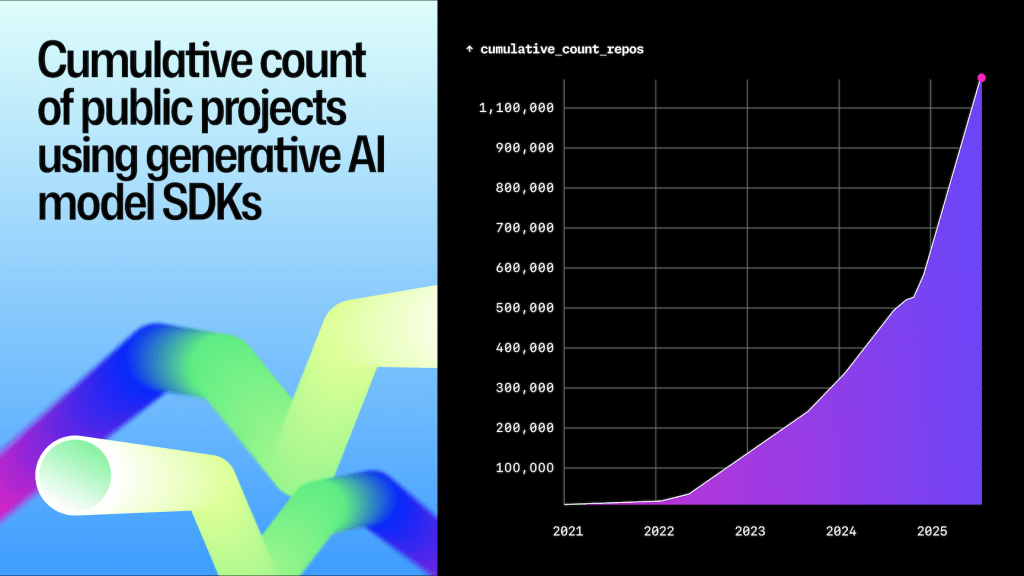
According to GitHub’s Octoverse 2025 report, over 1.1 million public repositories already use AI model integrations. Meanwhile, shell scripting usage in AI-assisted projects jumped 206% year-over-year — not because engineers suddenly fell in love with complex scripts, but because AI simply absorbed the friction that made those tasks hard. In other words, when AI reduces effort, people naturally reach for better tools.
This post synthesizes the latest trends shaping AI-driven development and explains, in plain language, what they mean for your business, whether you run a 20-person company or a 2,000-person enterprise.

What Does “Agentic AI” Actually Mean?
Before diving into the benefits, it helps to understand what makes AI agentic, and why that word matters.
Traditional software follows instructions you explicitly write. Agentic AI, by contrast, acts more like a capable colleague: it understands your intent, makes decisions, and executes multi-step tasks on its own. Coined by AI researcher Andrej Karpathy, the concept of “vibe-coding” captures this shift beautifully — developers are evolving from bricklayers of logic into architects of intent, communicating goals in natural language and letting AI handle much of the construction.
Think of it this way: in the past, building a digital product was like giving a chef a precise recipe with exact measurements. Today, you can say “I want something warm, seasonal, and impressive for a dinner party” — and the chef figures out the rest. That is the power of agentic AI for business.

Three Forces Driving the AI Shift in Business
1. The Convenience Loop: Why AI Changes What Tools We Choose
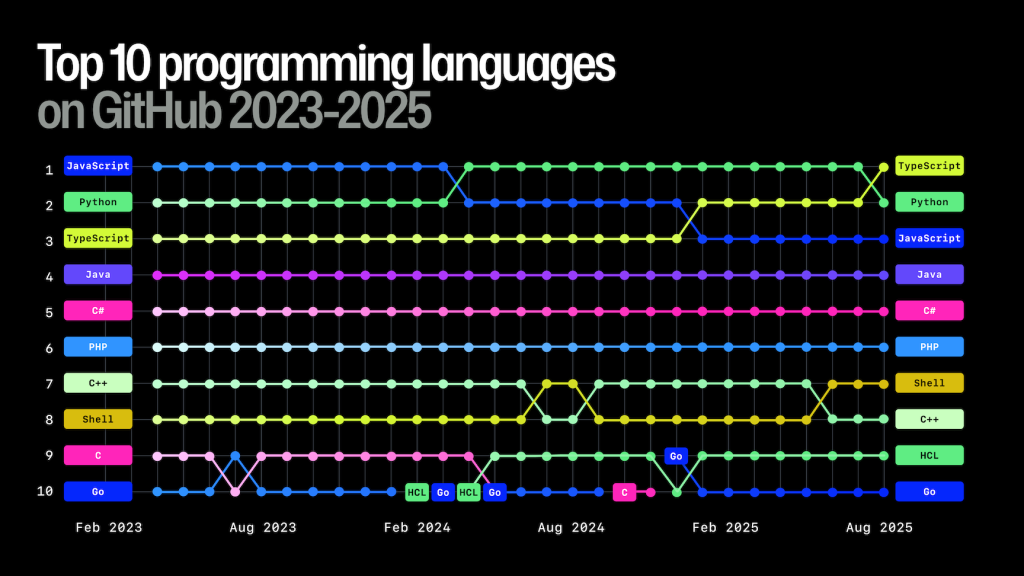
One of the most fascinating findings from GitHub’s Octoverse 2025 is that AI is not just speeding up work, it is actively reshaping which technologies companies adopt. When AI tools make a particular language or framework easier to use, developers naturally gravitate toward it. TypeScript, for example, grew 66% year-over-year on GitHub, partly because its structured, strongly typed nature helps AI generate more reliable code.
This “convenience loop” has a direct business implication: the tools and technologies your teams choose today are increasingly being influenced by how well they work with AI. Companies that ignore this dynamic risk accumulating silent technical debt — not through bad decisions, but simply through inertia.
2. Radical Cost Reduction for Businesses of Every Size
For decades, sophisticated technology was a privilege of large corporations. Agentic AI is changing that equation fast. Serverless architectures and cloud-based AI allow even small firms to rent computational power on demand, converting what used to be massive capital investments into manageable monthly costs.
MIT research confirms a significant productivity increase for workers, particularly those with lower technical skill levels — meaning your team does not need to be a squad of software engineers to benefit. Founders and business leaders can now rapidly prototype ideas, simulate market behavior, and build functional digital tools without multi-million-dollar R&D budgets.
3. Democratized Innovation: Competing With Giants
Perhaps the most empowering shift is this: small and mid-sized businesses can now compete with global corporations on digital agility. Agentic AI platforms handle the cognitive heavy lifting of data analysis, content generation, and workflow automation. This lets your team focus on what matters most — strategy, relationships, and the uniquely human work that AI cannot replicate.

The Real Benefits of Agentic AI for Business
Speed Without Sacrificing Quality
AI-assisted development teams consistently see a 20–30% increase in throughput, according to GitHub’s engineering research. Features ship faster. Prototypes are built in hours, not weeks. But speed alone is not the whole story — the teams getting the best results are those that establish strong foundations before they let AI run with a task. Good structures scale; weak ones get amplified by AI at the same pace.
Competitive Agility for Non-Technical Companies
You do not need an in-house data science team to benefit from AI-driven insights anymore. Agentic AI tools can interpret market trends, flag anomalies, and surface recommendations — automatically. This gives SMEs the analytical precision of large enterprises, without the headcount.
Future-Proofing Your Technology Decisions
One of the clearest takeaways from the Octoverse 2025 findings is this: if you are choosing technologies without considering AI compatibility, you are setting yourself up for future friction. The companies that weave AI-readiness into their technology choices today will avoid costly migrations and retraining costs tomorrow.
The Risks to Manage: Honesty About the Challenges
Agentic AI for business is powerful — but it is not magic, and pretending otherwise would do your organization a disservice. There are real risks worth understanding.
AI-generated codebases can carry up to 1.7x more bugs than manually written code, primarily because AI lacks the broader architectural context a seasoned engineer holds in their head. Security vulnerabilities — such as hardcoded credentials or poorly structured data queries — can be silently replicated at scale. And when AI models are trained on historical data, they can inadvertently encode outdated assumptions or biases into business processes.
The practical wisdom here is simple: not everything should be “vibed.” A useful mental framework distinguishes two zones. The first is the Vibe-Coding Zone — prototypes, landing pages, internal scripts, and low-stakes tools where speed matters and the cost of failure is low. The second is the Pro-Engineer Zone — financial systems, sensitive customer data, and mission-critical infrastructure where precision is non-negotiable and errors are expensive.
Knowing which zone you are operating in is half the battle.


How Origo Helps Your Business Navigate This Transition
This is precisely where Origo adds its most critical value.
Most SMEs and growing enterprises face the same challenge: they understand that AI represents a genuine opportunity, but they lack the internal expertise to adopt it safely, strategically, and sustainably. They may not have a dedicated cloud team, a security department, or engineers who stay current with fast-moving AI frameworks.
Origo bridges that gap. As an IT consultancy specializing in smooth technology adoption, Origo provides the expert guidance your team needs to:
- Choose the right AI tools for your specific industry, scale, and risk tolerance — without defaulting to whatever is loudest in the market.
- Establish strong architectural foundations before AI amplifies your workflows, ensuring that what scales is quality, not confusion.
- Manage the security and governance risks that come with AI-generated code and autonomous agents, even if you do not have an in-house security team.
- Customize agentic AI solutions to fit your business processes, rather than forcing your team to adapt to generic off-the-shelf platforms.
Origo’s approach is grounded in a simple belief: technology adoption does not have to be disruptive or intimidating. With the right partner, it can feel like a natural, confident evolution.

What This Means for You: A Practical Starting Point
You do not need to overhaul your entire organization overnight. Here are three grounded steps to begin your agentic AI journey:
Start by auditing your last three technology decisions. Which frameworks did you choose and why? How much did ease-of-use or AI tool compatibility factor in, even unconsciously? The GitHub data suggests it factored in more than most people realize. Awareness is the first step.
Identify one low-risk process to automate. Internal reporting, first-draft content creation, data formatting — these are ideal starting points. The goal is to build familiarity and confidence with AI before applying it to higher-stakes work.
Bring in expertise before you scale. The biggest mistake companies make is experimenting in isolation and only calling for help after problems surface. Partnering with a consultancy like Origo before you scale means your foundations are sound from day one.
Looking Ahead: The Autonomous Agent Horizon
The trajectory of agentic AI for business points toward something even more transformative. Future AI systems will not just assist developers — they will manage entire project workflows, refactor legacy systems, resolve technical debt, and coordinate across tools and services with minimal human intervention.
In this near future, the bottleneck for innovation will no longer be human typing speed or engineering capacity. It will be the clarity of human intent. The companies that invest now in learning how to communicate their goals clearly, define their standards explicitly, and build AI-compatible systems will be the ones best positioned to harness autonomous agents when they arrive.
The question is not whether agentic AI will reshape your industry. The Octoverse data, the vibe-coding movement, and the explosive adoption curves all confirm that it already is. The question is whether your business will shape that change — or be shaped by it.
Ready to Adopt AI on Your Terms?
Origo empowers enterprises to navigate the AI era with confidence, clarity, and the right expertise at their side. Whether you are exploring AI for the first time or looking to scale what you have already started, our team is ready to help you move forward — smoothly.

Visit www.origo.ec to discover how our human-centered approach can transform your AI journey from costly experiment to competitive advantage.