Most mid-market firms sent people through AI training this year. Few can point to one workflow that actually changed. That gap is where the return on the investment quietly disappears.
The training budget was never the real bottleneck
A slow AI rollout tempts leaders to blame the people. They think the team needs more hours in the tool, another certification, a refresher session. The data does not support that instinct.
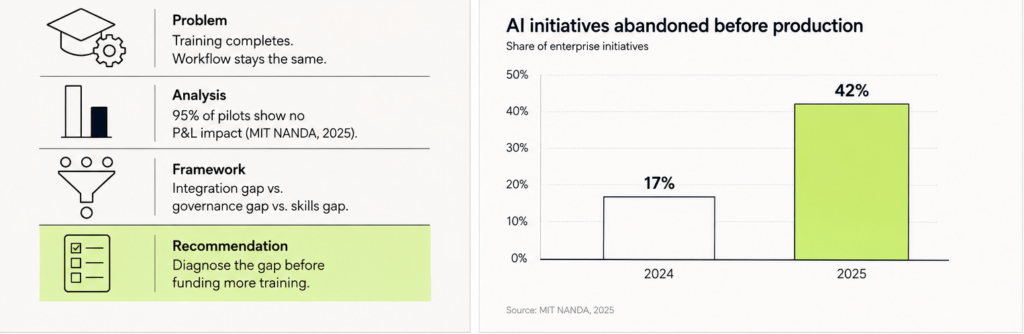
S&P Global Market Intelligence surveyed more than 1,000 enterprises across North America and Europe. It found that 42% had abandoned most of their AI initiatives before reaching production in 2025. That is up from 17% the year before. The average organization scrapped 46% of its AI proof-of-concepts before they ever shipped (CIO Dive, March 14, 2025).
MIT’s Project NANDA ran a separate study. Researchers reviewed more than 300 public AI deployments, conducted 52 structured interviews, and surveyed 153 senior leaders. They concluded that 95% of enterprise generative AI pilots showed no measurable effect on profit or loss (MIT NANDA, “The GenAI Divide: State of AI in Business 2025,” July 2025).
None of that points to a training problem, at least not the kind most training budgets assume. It points to a problem with what happens to the work once training ends.
What separates the firms that see a return
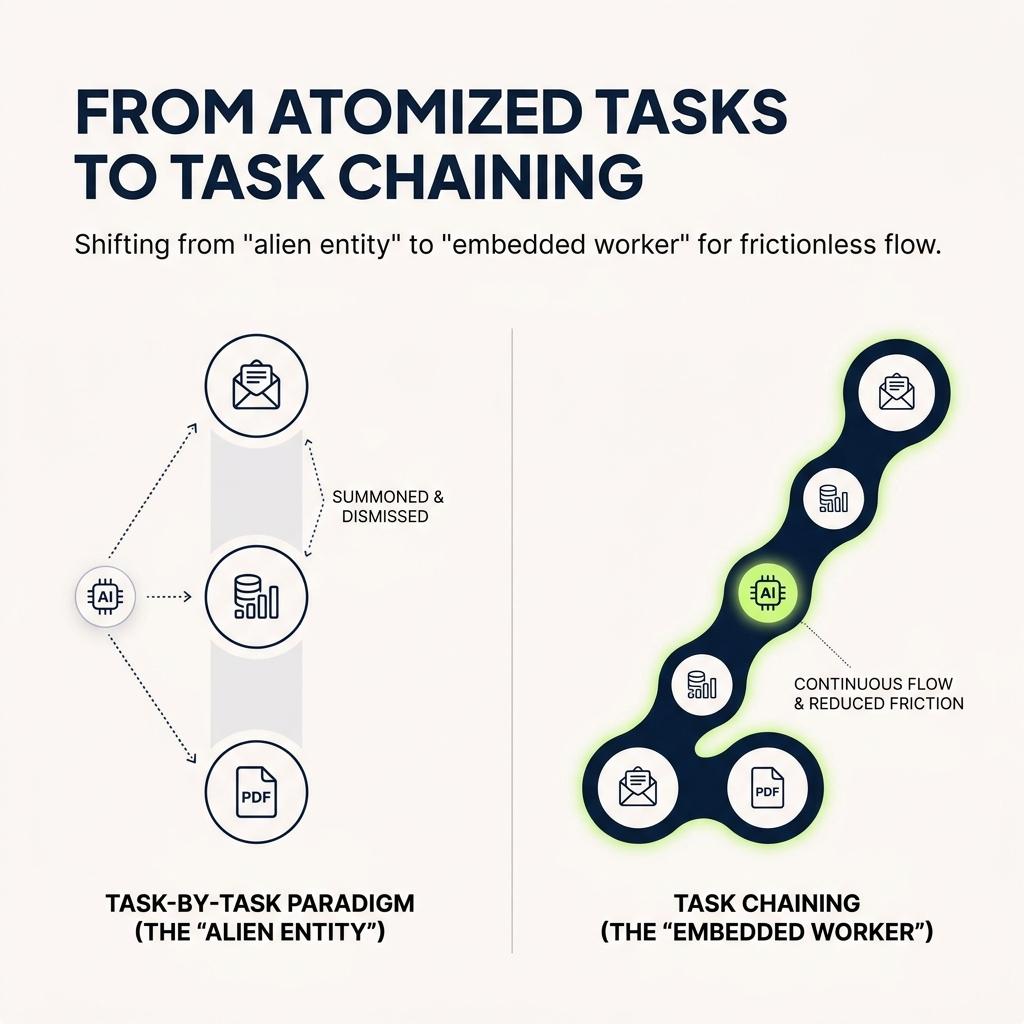
Boston Consulting Group ran its third annual AI-at-work survey. Researchers gathered responses from over 10,600 workers in eleven countries. They found that only 36% of employees feel adequately trained in AI use. The companies that capture real value go beyond deploying the tool. They reshape the workflow around it (BCG, “AI at Work 2025: Momentum Builds, But Gaps Remain,” June 26, 2025).
Sylvain Duranton, one of the report’s coauthors, put it plainly. Companies cannot simply roll out generative AI tools and expect transformation.
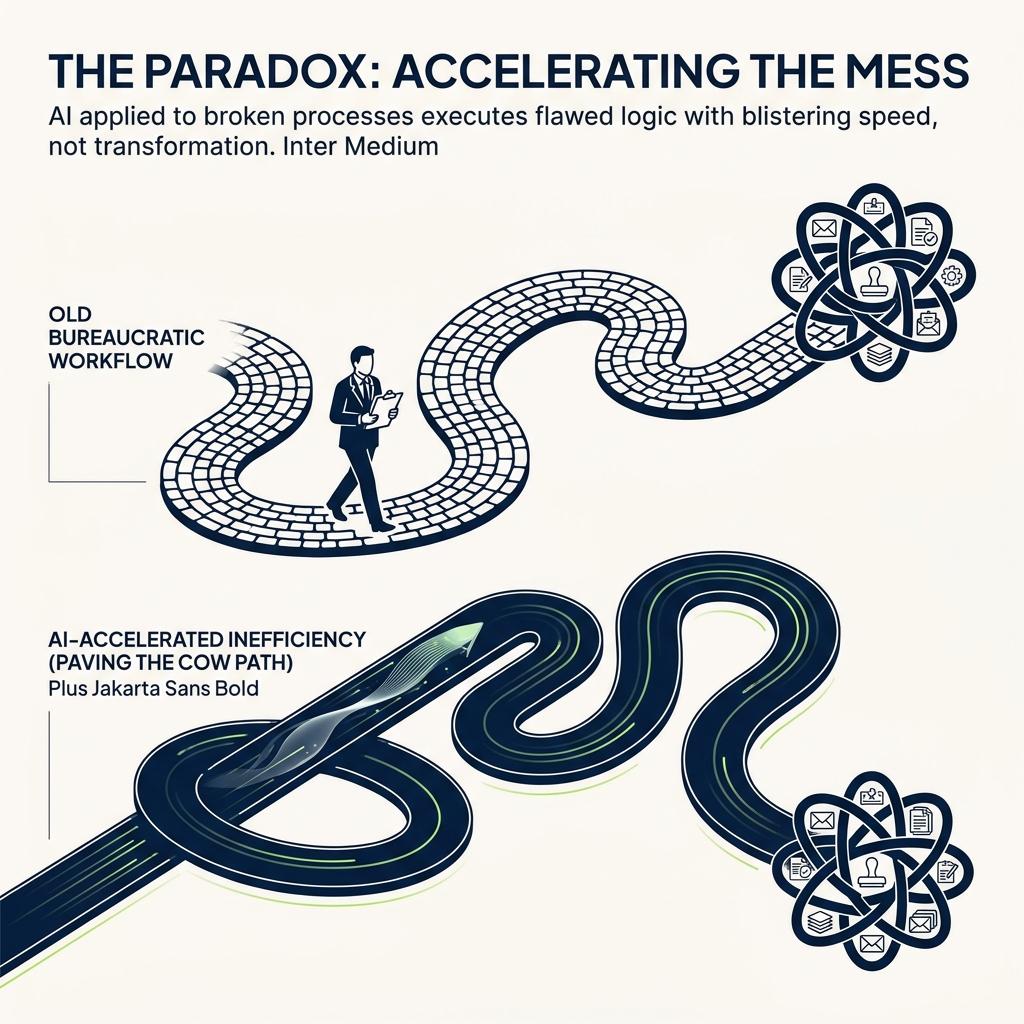
A more recent industry analysis makes the same point from a different angle. Teach a team to use AI, then send them back to the same meetings, approval chains, and handoffs. You have made a slow process move slightly faster. You have not made it fast (CIO, April 30, 2026).
Training produces users. It does not, by itself, produce an operating model that behaves differently.
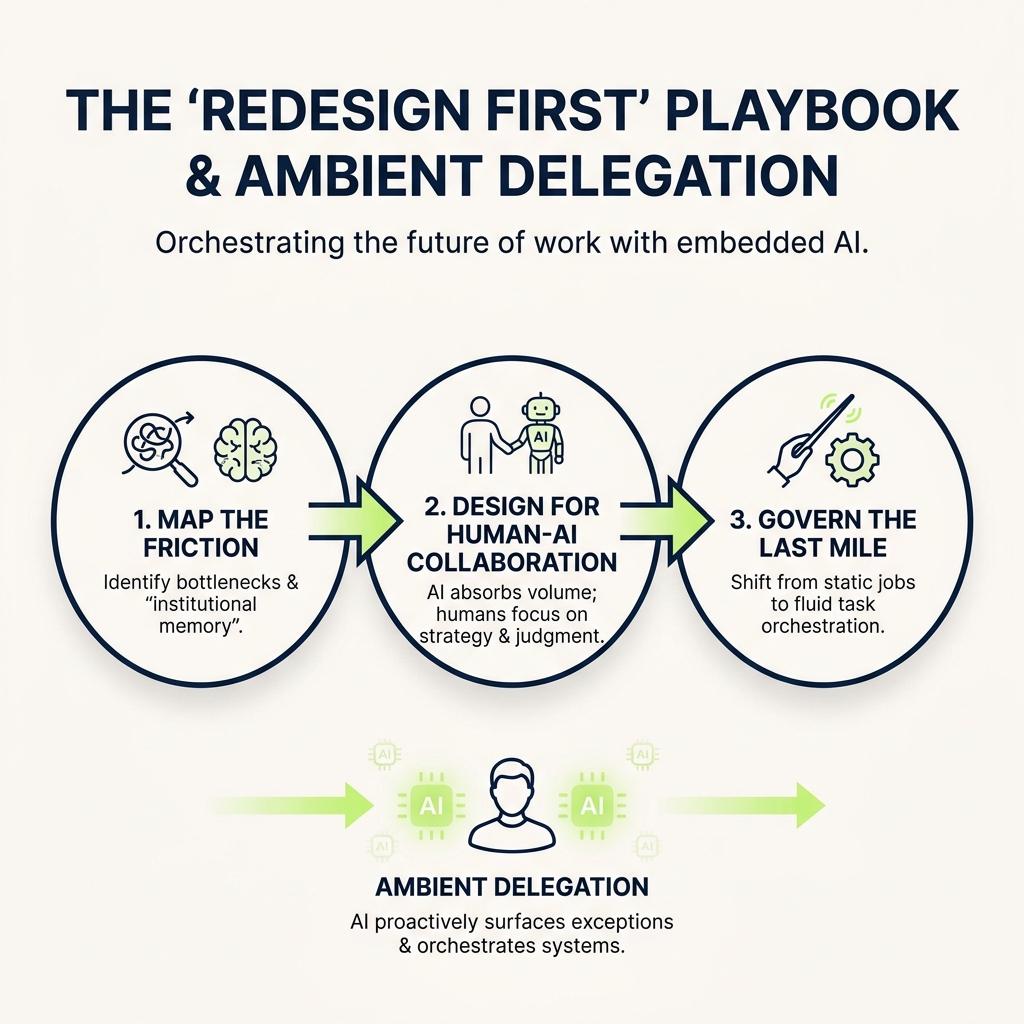
A firm with one AI budget line gets one shot at making it count. The sequencing question is the one that matters. Does the team need to learn the tool better? Or does the work itself need rebuilding around what the tool now makes cheap? Those are different problems, and they call for different spending.
Consolidation is often the redesign, not a side effect of it
Take a professional-services firm in Miami we worked with. Different departments had bought four separate AI subscriptions over time. Each one solved a narrow, local problem. None of them talked to each other or to the firm’s systems of record.
More training would not have fixed this. Consolidation did. We built one private retrieval layer on the API. It draws on the firm’s own documents instead of routing sensitive client material through a public chat interface. We paired it with model routing. Simple requests go to a cheaper model. The most capable model handles the work that actually needs it.
The redesign produced a cost reduction of up to 70% against the prior four-tool spend. No single tool did that on its own.
The lesson generalizes past this one client. Workflow redesign is often a consolidation exercise before it is anything else. Scattered tools are themselves evidence that no one has defined the workflow yet.
Governance has to come with the redesign, not after it
Redesigning a workflow around AI raises new stakes. A single chat window never forced these questions. Who can see which data? What does the system log? What happens when the model is wrong?
Skip this step while consolidating tools, and a firm trades one risk for another. It gains none of the cost or reliability benefit it was chasing.
This is also where diagnostic work earns its keep. A team’s real gap might be integration: can the tool reach the real data and systems? Or the gap might be governance: does the firm control access and keep an audit trail? Or the gap might simply be unfamiliarity with the tool. Each answer changes what leadership funds first. Funding training before that diagnosis usually means spending money on the wrong layer of the problem.
The decision in front of you

You should now be able to separate two questions. Do you need your team to learn the tool better? Or does the workflow around that tool need a rebuild, so the learning has somewhere to land?
Most of the enterprise data available right now points the same direction. The firms capturing real value redesigned the work first. They trained deliberately around that redesign, not the reverse.
Know which of those two problems you actually have before leadership approves your next training budget. That is the decision this moment calls for.
Origo built its free Claude Adoption Check for exactly that first read. It is a three-minute, six-dimension assessment that names the specific gap holding your team’s AI use back. We built it on the same kind of diagnostic work we bring to AI implementation planning and Claude adoption engagements.

Ready to explore what AI can do for your team?