
An associate pastes a signed client contract into a free AI chat window before a call. That single action sits outside any system the firm’s leadership reviews. It also sits outside the confidentiality language in the client engagement letter.
The tool did exactly what it was built to do. The real question is what the firm agreed to when someone typed into that box. Most firms have never actually looked.
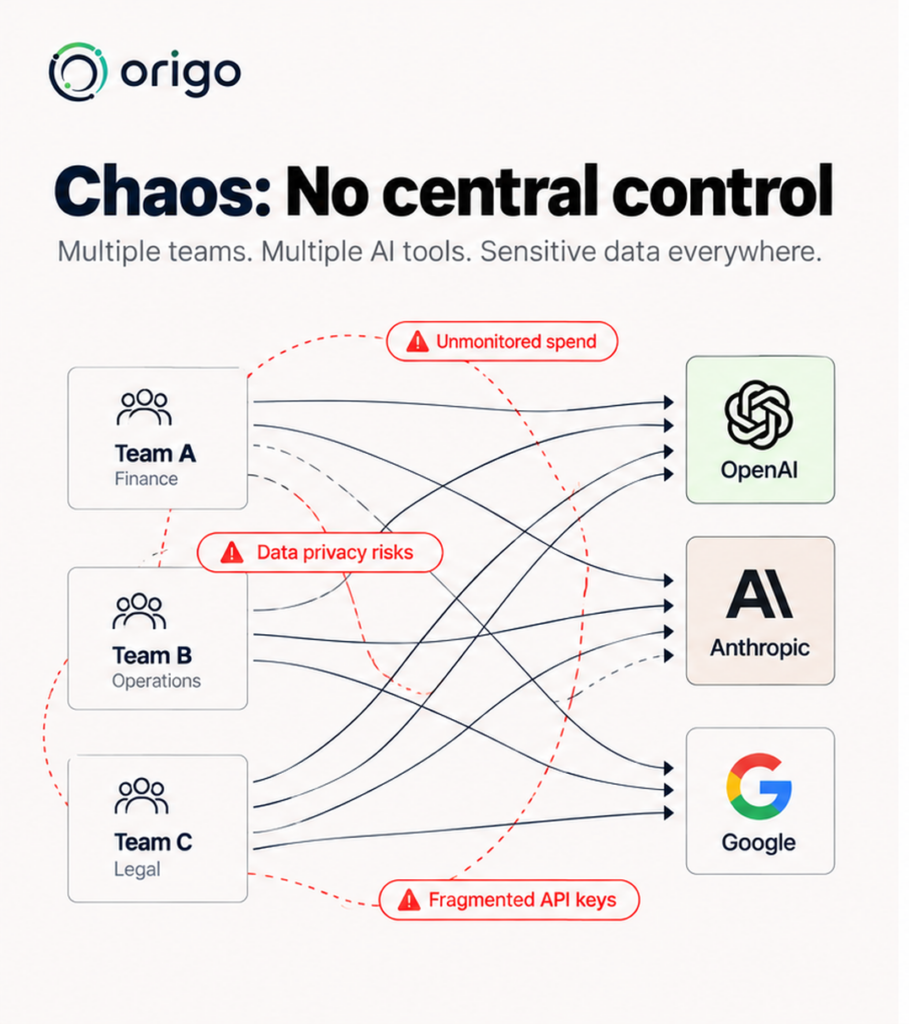
The chat window and the commercial product are different agreements
A consumer AI account and a business AI account can run the same underlying model. They still sit under entirely different terms. Anthropic’s privacy documentation draws this line explicitly. By default, Anthropic does not use inputs or outputs from its commercial products to train its models. That includes Claude for Work and the Anthropic API. Consumer accounts work differently. Anyone who opts into “Help Improve Claude” lets the company keep those conversations on file for up to five years (Anthropic Privacy Center) [SHELF LIFE — reverify vendor data-handling terms on publication date]. We use Anthropic’s terms as the example because Origo works inside them daily. The model behind the product rarely decides what happens to your data. The product wrapper does.
An employee opening a browser tab cannot see that distinction. A firm that has made promises to a client, a patient, or a regulator needs to see it clearly.
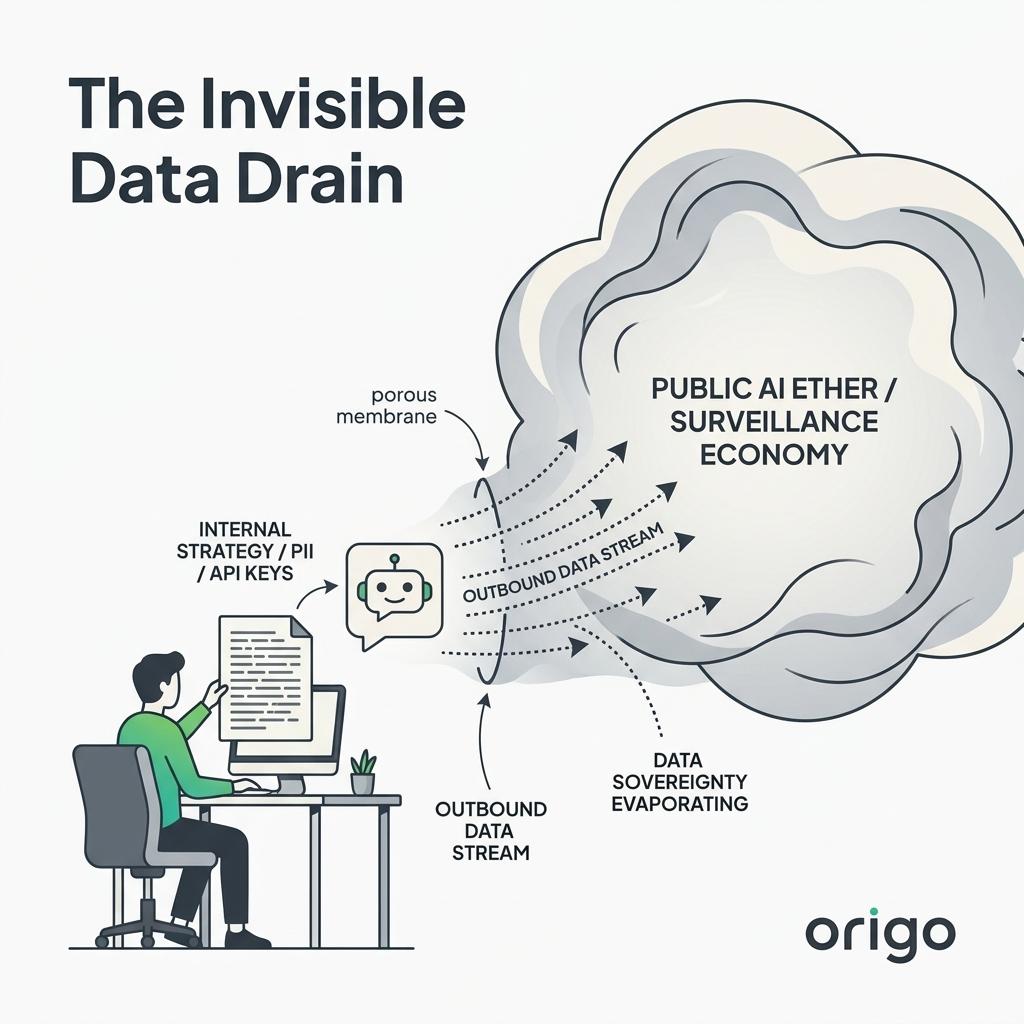
The exposure is larger than most leaders assume
This is not a hypothetical policy gap. A 2025 data security study by LayerX found that 45 percent of employees now use generative AI tools at work. Of those users, 77 percent have copied and pasted data directly into a chatbot query. Eighty-two percent of those pastes came from personal, unmanaged accounts rather than anything the company issued (The Register). A separate survey of 1,000 employees at large companies, run by TELUS Digital Experience in January 2025, found that 57 percent had entered confidential company information into public tools such as ChatGPT, Gemini, or Copilot. Sixty-eight percent reached those tools through personal accounts rather than anything IT had approved (Tech Monitor).
Neither study describes a hostile leak. It describes ordinary employees trying to work faster with whatever tool loads on their phone. That is exactly why leadership rarely sees it. It happens in browser tabs and personal logins, not in any system a firm thinks to audit.
Confidentiality obligations do not pause for convenience
For firms bound by professional or contractual confidentiality duties, the exposure carries more than reputational risk. The American Bar Association’s Formal Opinion 512, issued in July 2024, held that a lawyer’s duty of confidentiality covers client information typed into generative AI tools, no matter where that information came from. The Oregon State Bar built directly on that opinion in a formal opinion approved in February 2025. It draws an explicit line between “closed” AI systems, which process and retain data in an isolated, secure environment, and “open” systems, which keep learning from whatever gets typed into them. A lawyer needs informed client consent before using the open kind (Oregon State Bar). That is the same distinction a business account draws against a free chat window. The bar associations arrived at it from ethics rules. We arrive at it from ordinary contract risk.
We would extend the same logic past law firms. An accounting practice, a healthcare-adjacent business, or any professional-services firm under a client contract carries an equivalent obligation. That holds whether or not a bar association has written it down. The duty existed before the AI tool arrived, and it travels with the data regardless of which product an employee happens to have open.
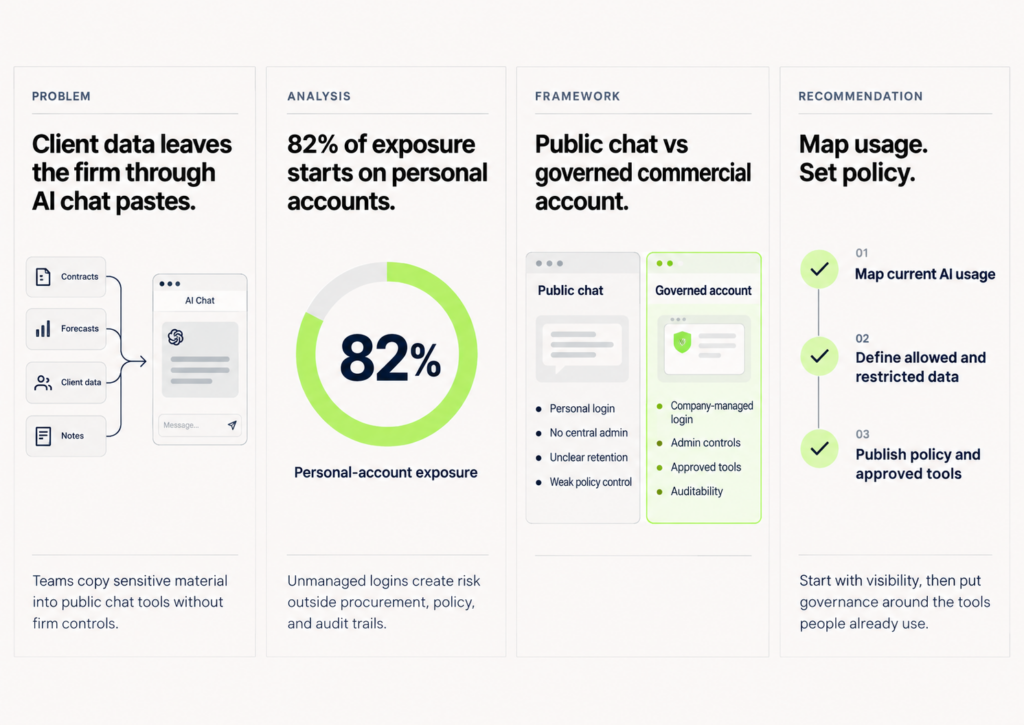
What actually changes with a private, API-based deployment
Moving from a consumer chat interface to a governed, API-based deployment is not primarily a technical upgrade. It changes who controls the data. It changes who can see the transcripts, and how long records stay on file. Done deliberately, it also gives a firm something it lacked before: a log of what was asked and what came back. That log becomes the foundation of any audit trail a client or regulator might eventually request.
None of that happens by installing a better tool. A leader has to decide, in writing, which data categories each product may handle. Someone has to pull the AI spend that currently sits on personal expense reports into something the firm actually manages. And someone has to revisit vendor terms on a schedule, because those terms change faster than most procurement cycles do. This is a governance decision before it is a technology one. It is usually a half-day of work once someone owns it.
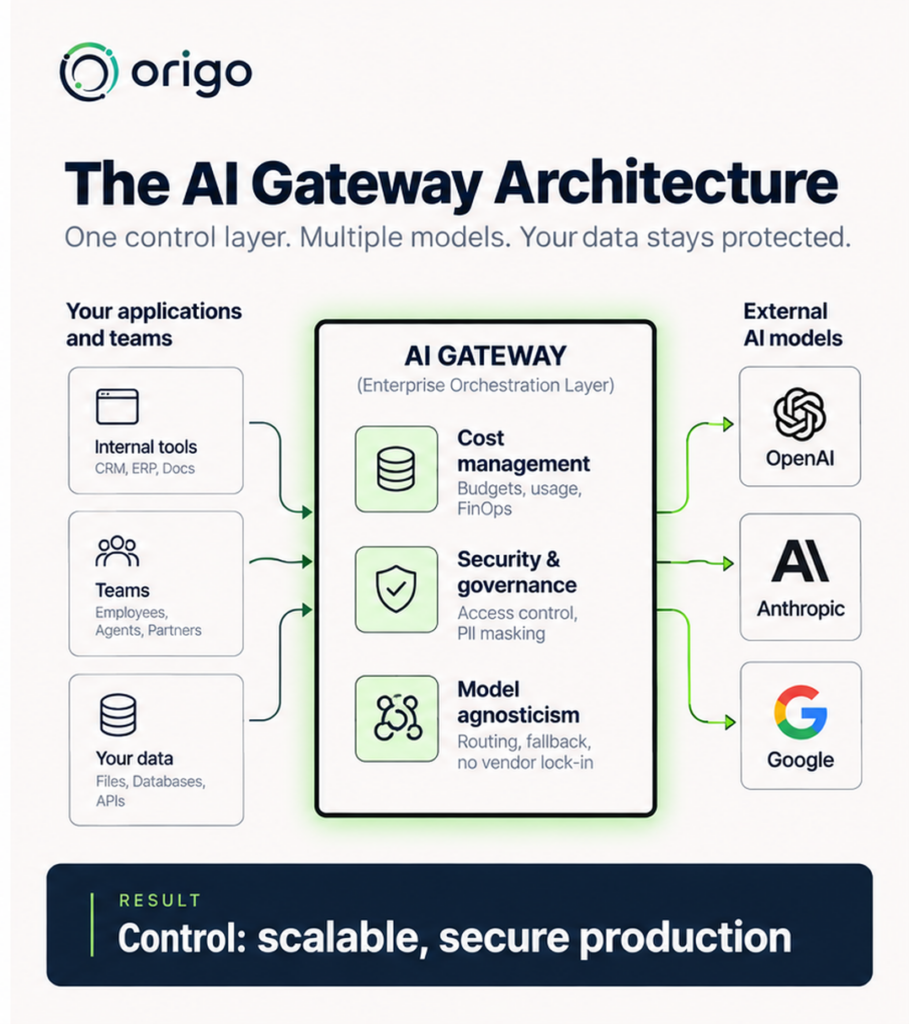
The decision this puts on the table
The question is not whether to permit AI tools inside the firm. Employees already answered that question, mostly on their own. The decision now in front of firm leadership is narrower. Find out this week what employees have already typed into consumer AI accounts under the firm’s name. Then decide which categories of client, patient, or financial data belong in which product going forward.
That decision is cheap next to the alternative. The alternative is discovering the answer during a client audit or a breach notification, not on an ordinary Monday morning. Origo works with firms on exactly this scoping, starting with a spend and governance audit and continuing through the strategic services that turn the audit into an enforceable policy. For firms already running Claude specifically, governance is one of the six dimensions the Claude adoption check is built to surface, alongside integration and cost.
If your firm has not mapped where client and financial data goes once someone opens an AI tool, that mapping is the place to start. Schedule a discovery call for an AI spend and governance audit.

Ready to explore what AI can do for your team?