

Agentic AI for business is no longer a futuristic concept — it is the foundation of how modern companies operate. If your organization still treats artificial intelligence as optional, you are already falling behind. But choosing the right AI tools does not require a computer science degree. It requires clarity, strategy, and the right partner.
In this guide, we break down the three leading AI platforms — ChatGPT, Claude, and Gemini — in plain language. Whether you run a growing SMB or lead a department inside a larger enterprise, you will walk away knowing which tool fits your needs, what risks to watch for, and how to adopt AI smoothly, even without an in-house tech team.
At Origo, we specialize in exactly this: empowering companies to embrace new technology with confidence, not confusion.
Why Agentic AI for Business Matters Right Now
The shift happened fast. Just a few years ago, businesses debated which AI was “smartest.” Today, the real question is: which one is most secure, and how do I keep my data safe?
AI has graduated from a novelty to an invisible platform for reasoning, automation, and daily decision-making. Companies that ignore this shift risk the same fate as those that ignored email in the 1990s — professional irrelevance.
The term “agentic AI” refers to AI systems that don’t just answer questions. They take action. They book meetings, manage workflows, draft reports, and flag risks. For business leaders, agentic AI for business means having a tireless digital colleague that handles repetitive work so your team can focus on strategy.
However, adopting these tools requires more than downloading an app. It demands understanding what each platform does best, where the risks lie, and how to integrate everything securely.

Meet the Big Three: ChatGPT, Claude, and Gemini
Not all AI assistants are built the same. Each of the three leading platforms has a distinct personality and strength. Think of them less as competing products and more as different specialists on your team.
ChatGPT — The Versatile Problem-Solver
OpenAI’s ChatGPT is the generalist. It excels at multi-step logic, building custom internal tools, and serving as a rigorous thinking partner for drafting documents, brainstorming strategies, or writing code.
Best for: Companies that need a flexible all-rounder for a wide variety of daily tasks — from writing proposals to automating internal processes.
Why it matters to your business: ChatGPT’s ability to create custom “GPTs” (mini-applications tailored to specific tasks) means your team can build internal tools without hiring developers. That said, getting the most out of it still requires thoughtful setup and integration.
Claude — The Careful Analyst
Anthropic’s Claude is built with safety and depth at its core. It is designed around the principles of Constitutional AI, which prioritizes helpful and honest interactions. Claude shines when you need it to process large, dense documents — think 200-page contracts, compliance reports, or regulatory filings.
Best for: Organizations handling sensitive data, legal documents, or complex research that demands accuracy over speed.
Why it matters to your business: Claude’s long-context retention means it can reference entire libraries of documentation without losing track. Its cautious design also makes it less likely to produce unreliable or risky outputs. For industries like healthcare, finance, or legal services, this matters enormously.
Gemini — The Workspace Powerhouse
Google’s Gemini is deeply woven into the Google ecosystem. It summarizes Gmail threads, parses Google Meet transcripts, and organizes data in Sheets. If your company already runs on Google Workspace, Gemini acts as the nervous system connecting everything.
Best for: Teams already embedded in the Google ecosystem who want AI that works where they already work — inside their inbox, calendar, and documents.
Why it matters to your business: There is minimal onboarding friction. Gemini enhances tools your team already uses daily, which means faster adoption and fewer disruptions.

Security First: The Non-Negotiable Rule of Agentic AI for Business
Here is the most important takeaway in this entire article: never use free, public-tier AI for confidential business data.
This is not an exaggeration. Using a free consumer AI tool to process client contracts, financial projections, or employee records is a serious security risk. Enterprise-tier subscriptions include critical protections such as end-to-end encryption, access controls, and compliance certifications.
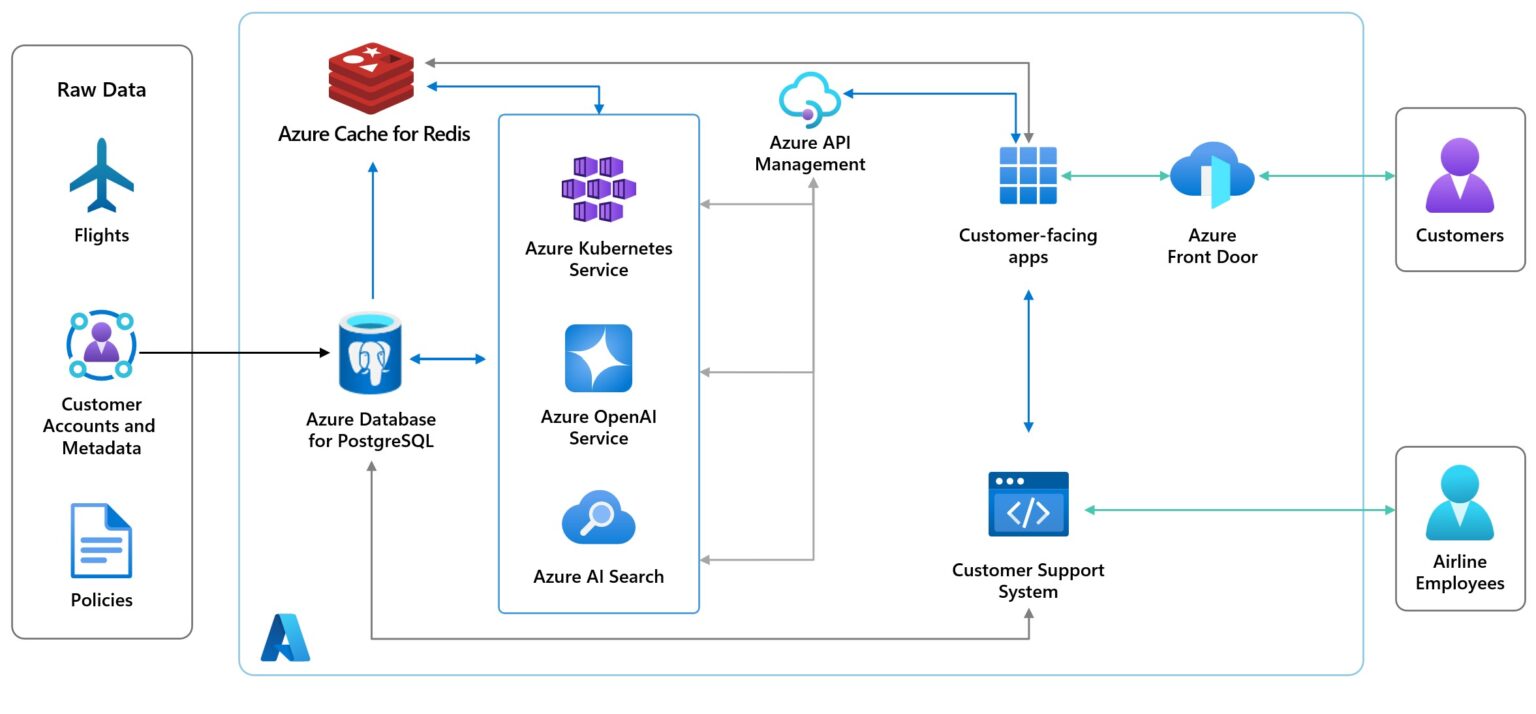
Platforms like Microsoft Azure offer enterprise-grade AI infrastructure with robust security layers, including compliance with regulations like GDPR. Azure’s OpenAI service, for example, gives businesses access to powerful models within a secure, controlled environment — a critical consideration for industries where regulatory compliance is mandatory.
At Origo, we help companies select and configure the right enterprise-tier tools, ensuring your data stays protected from day one. You do not need a dedicated security department. You just need the right partner.
How to Actually Use AI Well: The Pro Playbook
Choosing the right platform is only half the battle. The other half is using it effectively. Here are three principles that separate productive AI users from everyone else.
Keep a Human in the Loop
AI can hallucinate — meaning it sometimes generates information that sounds authoritative but is entirely wrong. This is not a flaw unique to one platform; it is a fundamental reality of how current AI models work.
The solution is simple: never relinquish final oversight. Every AI-generated output should be reviewed by a human before it reaches a client, a board, or the public. Think of AI as a brilliant but occasionally overconfident junior employee. Trust its work ethic, but always check the final product.
Prompt Like a Director, Not a Typist
The quality of what you get from AI depends entirely on the quality of what you ask. The most effective approach is the Role-Context-Task-Constraint framework:
- Role: Tell the AI who it should act as (e.g., “You are a financial analyst”).
- Context: Provide relevant background information.
- Task: State clearly what you need it to do.
- Constraint: Define limits (e.g., “Keep it under 300 words” or “Use only data from Q3”).
This simple shift transforms AI from a fancy search engine into a genuine strategic tool.
Choose the Right Model for the Right Task
No single AI platform does everything best. Smart companies route different tasks to different tools. Use Claude for deep document analysis, ChatGPT for versatile problem-solving, and Gemini for workflow integration. This intentional matching is where the real value of agentic AI for business emerges.

No-Code and Low-Code: Building Smart Solutions Without Developers
One of the most exciting developments for SMBs is the rise of no-code and low-code platforms. These tools let non-technical team members — sometimes called “citizen developers” — build functional business applications using visual interfaces and drag-and-drop components.
What Are They?
No-code platforms let users build complete applications without writing a single line of code. They are ideal for business users who need quick solutions — think automated procurement workflows, customer intake forms, or internal dashboards.
Low-code platforms offer more flexibility. They combine visual tools with the option to add custom scripts and API integrations. This approach works well for teams that have some technical knowledge and need deeper customization.
Why This Matters for SMBs
The global shortage of skilled software developers continues to grow. No-code and low-code tools help bridge that gap by enabling faster development cycles, lower costs, and greater team autonomy. Research shows adoption rates in this space are growing by around 50% annually.
Azure’s AI Foundry, for example, provides pre-built connectors and low-code tools that let businesses accelerate application development without heavy investment in engineering resources.
The Trade-Offs to Consider
These platforms are powerful, but they are not perfect. Challenges include potential scalability limitations for high-traffic applications, reduced customization options for very specific requirements, security considerations when the platform provider controls the underlying code, and ongoing maintenance complexity for non-technical users.
This is precisely where expert guidance makes the difference. At Origo, we help companies evaluate which platforms match their scale, integrate new tools with existing systems, and avoid the common pitfalls that derail digital transformation projects.

What Is Coming Next: From Chat to Action
The next phase of agentic AI for business is already taking shape. Here is what to expect.
AI That Executes, Not Just Advises
Today’s AI assistants talk about tasks. Tomorrow’s will execute them — booking travel, filing tickets in project management tools, processing invoices, and more. The shift from “chatbot” to “digital agent” is happening rapidly.
Deeper Integration Into Your Desktop
AI is embedding itself into operating systems and browsers. Windows, Chrome, and workspace tools are all building AI into their core experience. Soon, AI will not be a separate app you open. It will be an ambient layer running across everything you do.
Smarter Reasoning
New “System 2 thinking” capabilities mean AI models will pause and plan internally before responding. This leads to more thoughtful, accurate outputs — especially for complex business decisions that require weighing multiple variables.
Where Origo Fits In
If you have read this far, one thing should be clear: adopting agentic AI for business is not optional, but doing it well requires guidance.
Most SMBs and growing enterprises do not have dedicated Cloud teams, AI specialists, or innovation departments. That is not a weakness — it simply means you need the right partner.
Origo exists to fill that gap. We help organizations select the right AI tools for their specific needs, configure enterprise-grade security from day one, build smart solutions using no-code and low-code platforms, and train teams to use AI effectively and responsibly.
At Origo, we do not believe in forcing complex technology onto unprepared teams. We believe in smooth adaptation — meeting your company where it is and guiding it toward where it needs to be.

Your Quick-Start Checklist
Before you close this tab, run through this list. It takes five minutes and could save your business from costly missteps.
- Audit your current AI usage. Is anyone on your team using free public-tier AI tools for company data? If yes, stop immediately and upgrade to enterprise tiers.
- Match the tool to the task. Identify which platform — ChatGPT, Claude, or Gemini — fits each of your core workflows.
- Establish a Human-in-the-Loop policy. Make it official: no AI output goes external without human review.
- Evaluate no-code opportunities. Identify repetitive manual processes that could be automated without hiring developers.
- Talk to an expert. Reach out to Origo for a free consultation on how to adopt AI safely and strategically.


Agentic AI for business is reshaping how companies compete, collaborate, and grow. The question is not whether to adopt it — the question is how well you will do it. With the right tools, the right policies, and the right partner, even the least tech-savvy organization can thrive in this new era.