
Most organizations using Claude today can describe what they’re doing with it. Few can describe how well they’re doing it.
That gap (between activity and maturity) is where most AI initiatives quietly stall. A team experiments with a use case, sees early results, and then plateaus: the pilot never becomes infrastructure, the governance conversation never happens, the cost model never gets built. Nobody notices until budget season, when someone finally asks what the return has actually been.
We built the Origo Claude Adoption Assessment to answer that question before it becomes an uncomfortable one.
What it does
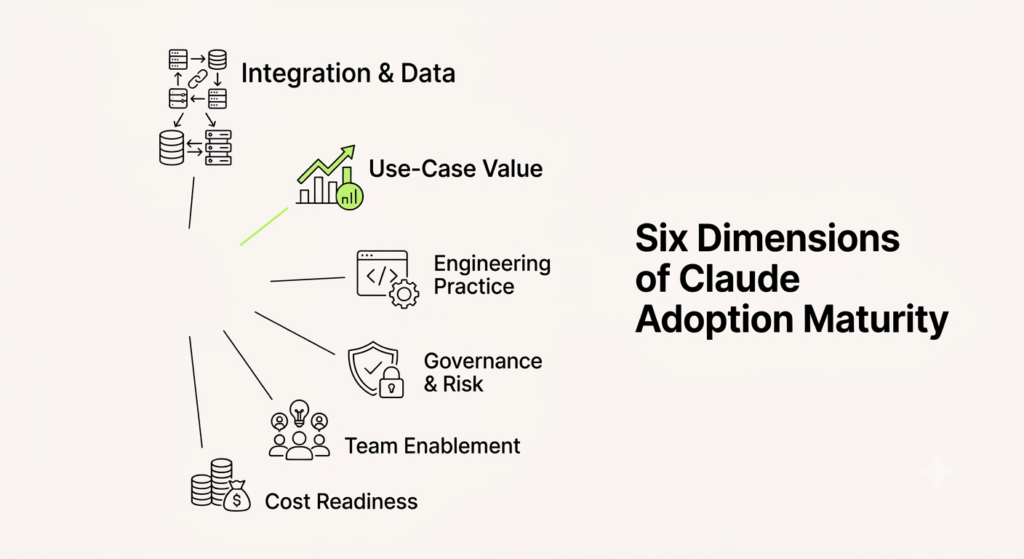
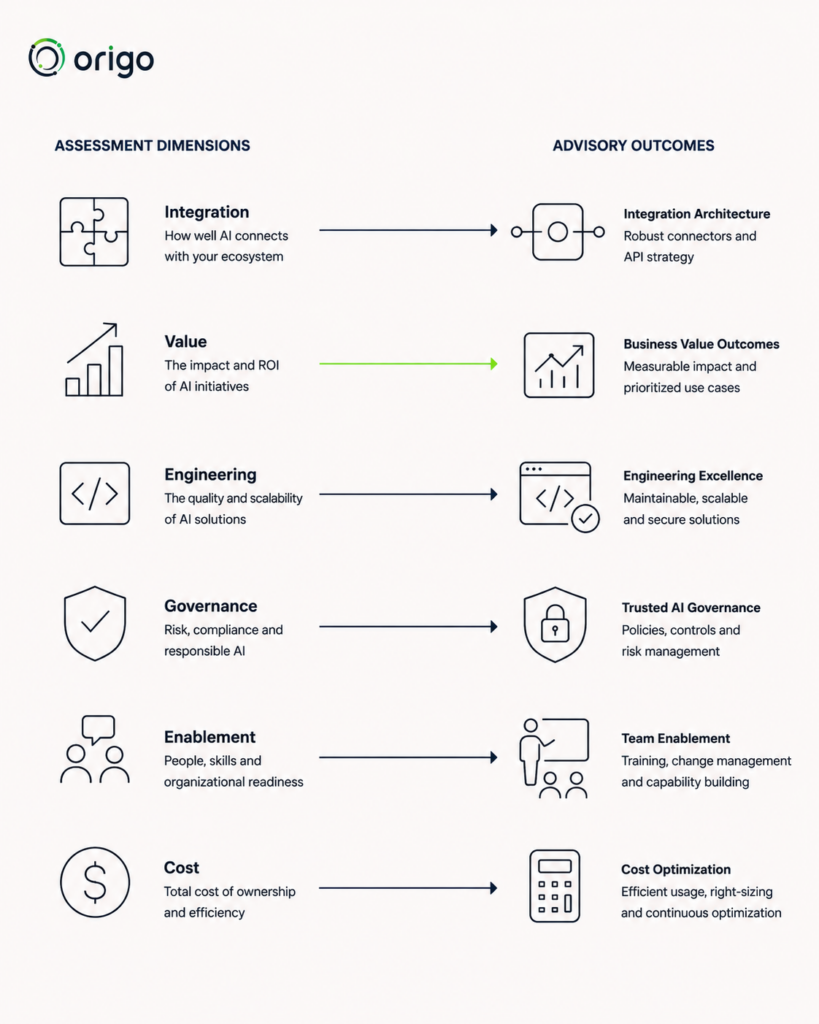
The assessment is a short, structured diagnostic: 24 statements, about three minutes, available in English and Spanish. At the end, you get a score across six dimensions of adoption maturity, how well Claude is integrated into your systems and data, how much realized value your use cases are actually producing, the quality of your engineering practice, the state of your governance and risk posture, how prepared your team is to use it well, and how disciplined your cost model is. You also get two things most self-assessments skip: your strongest dimension, and the single gap most likely holding you back.
It’s free, and there’s no registration required to see your score. A personalized report, the same six dimensions, with recommendations specific to your context — is available afterward if you want to go deeper.
Why we built it this way
Origo doesn’t sell AI. We help organizations figure out where they actually stand with it, and what to do next, which is closer to a diagnostic than a demo. That’s the same logic behind everything we do: the technology matters less than whether it’s solving a real business problem.
The six dimensions aren’t arbitrary. Each one maps to a decision an organization eventually has to make — whether to invest in deeper integration, whether the use cases already in production are earning their keep, whether engineering practices will hold up at scale, whether governance is ready for scrutiny, whether the team has what it needs, and whether the cost structure would survive a serious audit. Most organizations are stronger in some of these than others. Knowing which is the difference between fixing the right problem and guessing.
What happens after your score
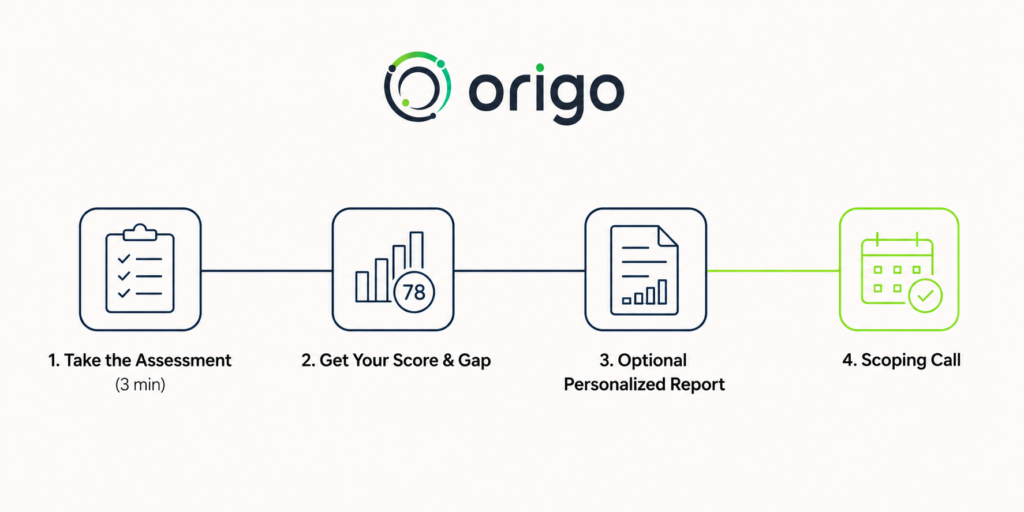
If the assessment surfaces a gap worth addressing, the natural next step is a scoping call — no packaged pitch, just a conversation about what closing that gap would actually involve. That holds whether the gap is technical, like integration or engineering practice, or organizational, like governance or team enablement.
This is v1. We built it to be useful on day one, not finished. If something in it doesn’t ring true for your organization, we’d rather hear that than have you quietly disagree and close the tab.
Try it
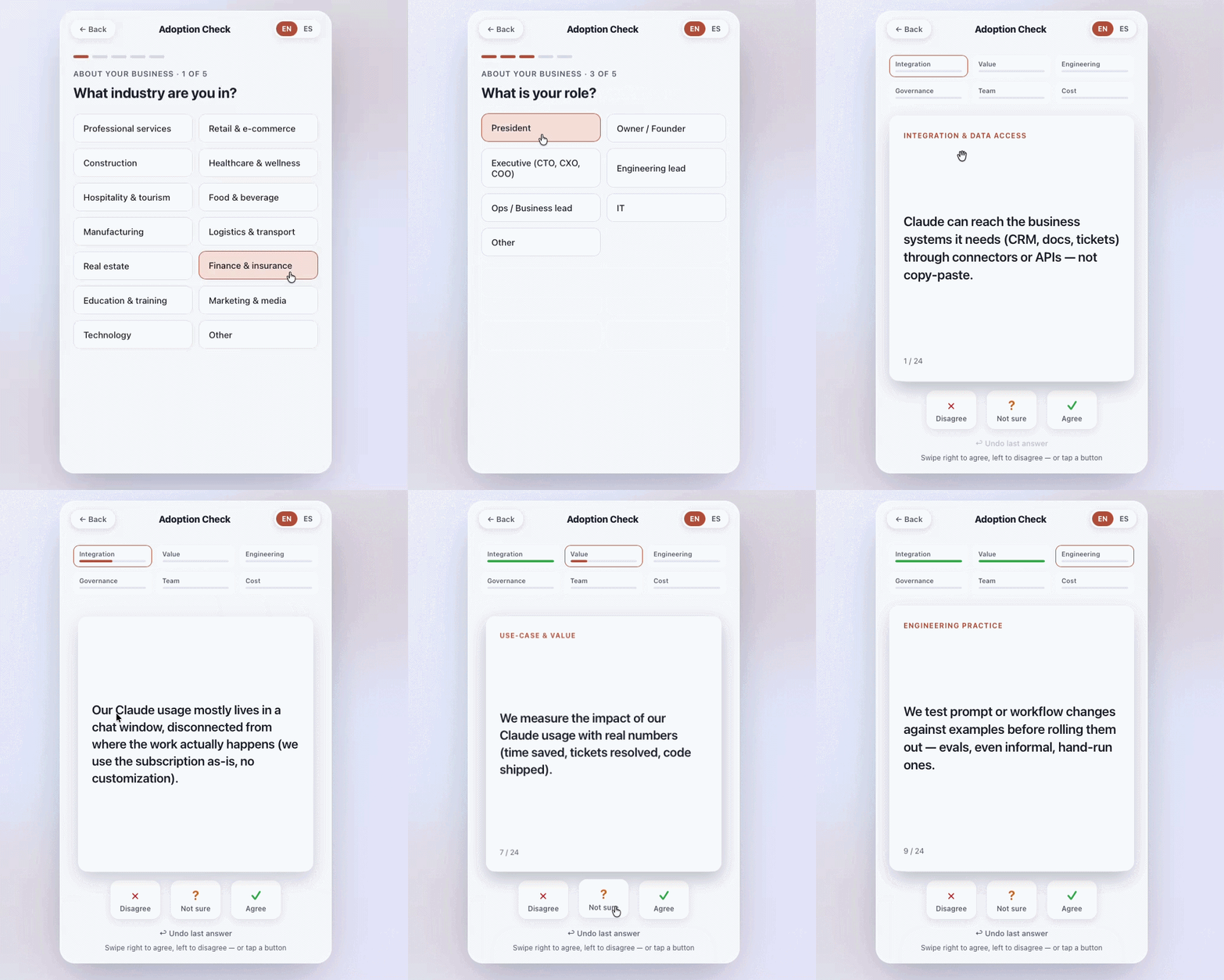
The assessment is live now at adoption.origo.ec. It takes about three minutes, and there’s no form to fill out first.
Origo is a Claude Partner Network participant. This assessment is an independent Origo tool and is not an Anthropic product.
Ready to explore what AI can do for your team?