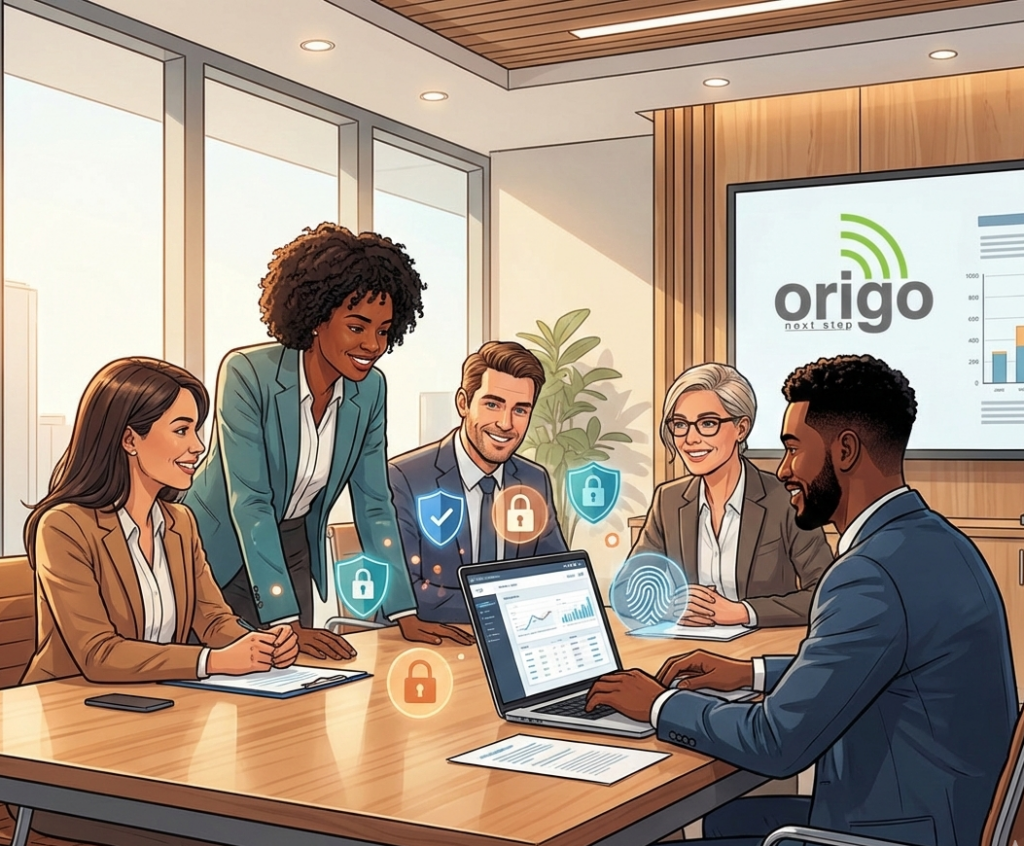
In today’s digital landscape, small and medium-sized businesses face an uncomfortable truth: the same AI technology that helps you compete with industry giants is also weaponizing cybercriminals like never before. For business owners without dedicated IT departments, understanding this paradox isn’t just academic, it’s essential for survival.
The Great Equalizer Has a Dark Side
Generative AI has democratized both business innovation and cybercrime. While you’re using AI to automate customer service and streamline operations, attackers are using the same technology to craft sophisticated phishing emails that pass the “eye test” and generate malware without writing a single line of code.

The barrier to cybercrime has collapsed. What once required specialized technical skills can now be accomplished through simple prompts to an AI system. This shift has transformed the threat landscape for SMBs from occasional, easily-spotted scams to hyper-personalized, scaled attacks that target hundreds of businesses simultaneously.
Why Small Businesses Are Prime Targets
Cybercriminals have run the numbers, and the economics are clear:
- Technical asymmetry: Most SMBs lack the budget for advanced defensive systems, creating a significant vulnerability gap
- Supply chain access: Smaller vendors serve as entry points to larger, more lucrative targets
- Volume strategy: AI enables attackers to simultaneously target thousands of businesses, making aggregate small ransoms more profitable than single high-profile breaches
The uncomfortable reality? Security through obscurity no longer works. Your business doesn’t need to be “interesting” to be targeted—it just needs to be accessible.

The Most Common Cybersecurity Threats Facing Your Business
Understanding the threats is the first step toward protecting your business. Here are the attacks you’re most likely to face:
Phishing: The 90% Problem
Phishing attacks account for over 90% of data breaches. These aren’t the obvious “Nigerian Prince” emails anymore. Modern phishing campaigns use AI to craft perfect grammar, research your business relationships, and create urgency that compels action before critical thinking kicks in.
What it looks like: An email appearing to be from your bank, a trusted vendor, or even your CEO requesting urgent action—password resets, wire transfers, or clicking a malicious link.
Ransomware and Malware
Ransomware encrypts your critical business data and demands payment for decryption. The consequences extend beyond the ransom itself: operational downtime, lost customer trust, and potential regulatory penalties for data breaches.
Weak Passwords: The Unlocked Back Door
Simple passwords remain one of the most exploited vulnerabilities. When employees reuse passwords across multiple accounts or choose easily guessable combinations, they’re essentially leaving the back door to your business unlocked.
Insider Threats
Not all threats come from outside. Employees can inadvertently compromise security through careless actions or, in rare cases, intentional malicious behavior. The distinction between intentional and unintentional hardly matters when the damage is done.

Practical Cybersecurity Precautions That Don’t Require a Tech Degree
You don’t need to become a cybersecurity expert to protect your business. These straightforward measures provide substantial protection:
1. Strong Passwords and Password Managers
The rule: Use unique passwords of at least 12 characters combining letters, numbers, and symbols for every account.
The solution: Password managers generate and securely store complex passwords, eliminating the burden of remembering them. This single tool can dramatically improve your security posture overnight.
2. Two-Factor Authentication (2FA) Everywhere
2FA adds a second verification step—typically a code sent to your phone—making unauthorized access exponentially harder. Enable it on every account that offers it, especially email, banking, and business-critical applications.
3. Regular Software Updates: Your Digital Maintenance
Software updates aren’t just about new features—they’re critical security patches that close known vulnerabilities. Enable automatic updates wherever possible to ensure you’re never running outdated, exploitable software.
4. Secure Your Wi-Fi Network
An unsecured Wi-Fi network is an open invitation to attackers. Ensure your business network is:
- Password-protected with a strong password
- Encrypted (WPA3 or WPA2 at minimum)
- Hidden (don’t broadcast the network name)
- Separated (create a guest network for visitors)
5. Regular Data Backups
Backups are your insurance policy against ransomware and data loss. Follow the 3-2-1 rule: three copies of your data, on two different media types, with one copy stored offsite or in the cloud. Test these backups regularly to ensure they actually work when you need them.
6. Antivirus and Anti-Malware Software
Reputable security software provides a critical defense layer by detecting and blocking known threats. Keep these solutions updated—they’re only effective against the latest threats if regularly maintained.

Your Most Important Security Asset: Your People
Technology alone won’t protect your business. Your employees are both your greatest vulnerability and your strongest defense.
Implementing Effective Security Awareness Training
What employees need to know:
- How to identify suspicious emails and phishing attempts
- Why they should never click unknown links or download unexpected attachments
- When and how to report potential security issues
- The real-world impact of security breaches on the business
Making Training Stick
One-time training isn’t enough. Cybersecurity awareness requires:
- Regular updates: Monthly or quarterly refreshers on emerging threats
- Practical scenarios: Simulated phishing tests that provide immediate feedback
- Open communication: A culture where reporting suspicious activity is encouraged and rewarded
- Gamification: Scoring and friendly competition make security training memorable
The investment in employee training delivers returns far beyond its cost. A well-trained team can catch threats that technology might miss.

Building Your Incident Response Plan
When—not if—a security incident occurs, panic and confusion make everything worse. An Incident Response Plan (IRP) provides a clear roadmap for managing crises effectively.
Essential Components of Your IRP
Step-by-step procedures: Document exactly what to do when you discover a breach, including how to contain it and whom to contact.
Defined roles: Every team member should know their specific responsibilities during an incident. This clarity eliminates confusion when time is critical.
Communication strategy: Plan how you’ll inform stakeholders, customers, and team members about incidents. Transparency maintains trust even during crises.
Regular practice: Review and test your IRP at least annually. Run simulations to ensure everyone knows their role and the plan actually works.
Creating a Reporting Culture
Encourage employees to report potential threats without fear of blame. Early detection often prevents minor incidents from becoming major breaches. Make reporting easy and recognize those who speak up.
Cost-Effective Security Tools for Resource-Conscious Businesses
Robust cybersecurity doesn’t require enterprise budgets. These affordable solutions provide substantial protection:
- Multi-Factor Authentication (MFA): Often free or low-cost add-ons to existing accounts
- Cloud-based backup solutions: Scalable, affordable options that eliminate the need for physical infrastructure
- Endpoint Detection & Response (EDR): Tools like Microsoft Defender for Business offer enterprise-level protection at SMB pricing
- Firewalls and network security: Modern routers include built-in security features when properly configured
The Role-Based Access Approach
Implement the principle of least privilege: employees should only access the information necessary for their specific roles. This “need-to-know” approach minimizes internal threats and limits damage from compromised accounts.
Regular access reviews ensure permissions remain appropriate as roles change.

Where Origo Can Help: Bridging Your Expertise Gap
Many small and medium-sized businesses understand the importance of cybersecurity but lack the in-house expertise to implement comprehensive solutions. This is where Origo’s human-centered approach makes the difference.
Expert Guidance Without the Complexity
Origo specializes in making technology accessible. Our team provides:
- Security assessments: Identify your specific vulnerabilities without technical jargon
- Implementation support: Deploy security measures that fit your business operations
- Ongoing guidance: Stay ahead of evolving threats with expert advice tailored to your needs
- Cloud and AI expertise: Leverage modern security tools without building internal capabilities from scratch
Technology That Fits Your Business
We don’t believe in one-size-fits-all security. Origo’s approach adapts security solutions to your unique operational needs, ensuring protection doesn’t come at the cost of productivity. Whether you need help securing cloud infrastructure, implementing AI-powered security tools, or training your team, we provide the expertise that makes technology work for you—not against you.
Learn more about how Origo can strengthen your cybersecurity posture
The Path Forward: Vigilance as a Business Practice
The digital Jekyll and Hyde of AI technology isn’t going away. The same tools that democratize business innovation will continue enabling sophisticated attacks. But awareness, preparation, and the right support can shift the odds dramatically in your favor.
Cybersecurity for small businesses isn’t about achieving perfect protection—it’s about making your business a harder target than the next one. Every layer of defense you add, every employee you train, and every backup you maintain increases the likelihood that attackers will move on to easier prey.
The price of innovation in today’s automated warfare is indeed vigilance. But with practical precautions, a security-conscious culture, and expert partners like Origo, that price becomes manageable—even for businesses without dedicated IT departments.
Take Action Today
Start with these immediate steps:
- Implement password managers across your organization
- Enable two-factor authentication on all critical accounts
- Schedule monthly security awareness discussions with your team
- Create or review your incident response plan
- Contact Origo for a security assessment tailored to your business needs
Your business’s digital security is too important to leave to chance. The threats are real, but so are the solutions. Take the first step today.

Ready to strengthen your cybersecurity without building an IT department from scratch? Visit Origo to discover how our human-centered approach can protect your business while empowering your team to embrace technology with confidence.